Choosing the right driver head weight is a key factor in

Many golfers overlook the importance of weight when choosing a club. Especially when selecting a driver, people often focus solely on head size or speed, but head weight has a much deeper impact. While it was once believed that "heavier heads fly further," modern golf emphasizes weight adjustment to directly influence swing balance, accuracy, and initial impact stability. Generally, if the head weight is 200g or less, the swing tends to become unstable during impact, making it difficult to maximize power. Conversely, if the weight exceeds 205g, it can create a speed restriction that puts strain on the body. Finding this balance is crucial because a driver's true strength lies not in brute force, but in control.
What problems arise when the driver head weight is too low?
- Increased rebound after impact and a disrupted swing loop: A head that's too light creates significant rebound at the moment of impact. This causes the clubhead to twist rapidly, especially during the downswing, resulting in a "kickback" effect. This disrupts the swing tempo and makes it difficult to control the head, particularly during the mid-swing when speed increases.
- A sharp decline in initial impact accuracy: Insufficient weight exacerbates "clubhead dispersion." When the head rotates or moves off-center during impact, the ball's direction becomes unstable. Especially for beginners and intermediate players, this phenomenon is often overlooked, leading them to mistakenly believe that their swing is flawed.
Why are heavier heads (205g or more) a problem?
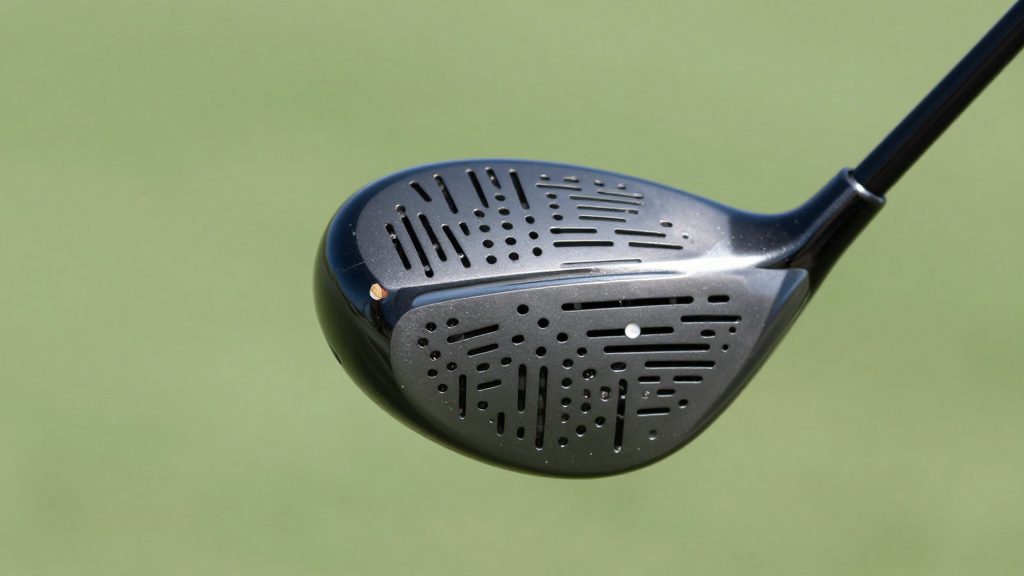
[Image of driver head weight selection, a key condition for reducing golf losses]
- Reduced swing speed and wasted energy: A heavier head requires greater strength and swing power to hit the ball effectively. However, most golfers compromise on weight capacity to maintain their swing speed, which hinders the build-up of power. Furthermore, any tension in the shoulders or arms during the swing dissipates the "full-swing" energy just before impact.

- Reduced defense against off-center hits: While a heavier head provides a strong "impact feel," it also makes the swing more prone to disruption. This interferes with the swing tempo and increases the risk of losing momentum, especially during the transition from backswing to downswing. As a result, slices or pulls are more likely to occur.
[Image of driver head weight selection, a key condition for reducing golf losses]
What is the most appropriate weight range?
[Image of driver head weight selection, a key condition for reducing golf losses]
- Generally recommended range is 203g to 208g, depending on gender and swing style. For female golfers or those with a swing speed of 50-60 m/s or less, 203g to 205g is suitable. This weight range maintains swing tempo while ensuring impact stability. For men with a swing speed of 70 m/s or more, 206g to 208g is more appropriate. This weight range provides stability in the latter part of the swing due to the head's inertia.
- The importance of weight balance: Head weight is not a standalone factor; it's connected to the swingweight. For example, even if the head weighs 205g, if the grip or control lever is too light, the overall swingweight will still feel like a "heavy head." Therefore, weight should be adjusted based on the swingweight index (D-0 to D-5, etc.).

The most important check: the relationship between head weight and your swing style.
[Image of driver head weight selection, a key condition for reducing golf losses]
- If your swing speed is slow, consider a weight of 203g to 205g. If your swing speed is fast, consider a weight of 206g or more.
- If your swing tempo is irregular, or if the swing stops after impact, a lighter head may be a better control tool than a heavier one.
- If you feel the head twisting backward during the downswing, it may be due to insufficient weight, so consider a weight of 205g or more.
- If you feel tension in your shoulders or arms during the swing, it may be due to "energy waste" caused by a heavy head. In this case, you may need to adjust the weight based on your swing tempo.
---
Golf is all about the "swing," but the core of that swing lies in the club itself. The weight of a driver head is not just a number; it's a fundamental element that shapes the feel of the swing and the stability of impact. When choosing a weight, you should not simply choose what "you like," but rather determine whether it's appropriate for your swing tempo and speed. Don't think that a heavier head will automatically send the ball further. Instead, achieving the correct weight ensures that the power of your swing is accurately transferred to the ball at the moment it leaves your hands. When you feel like "the ball isn's going where it should" on the course, remember that the weight of the head is often a key factor.
Quick Comparison
| Category | Item A (200g or less) | Item B (205g or more) |
|---|---|---|
| Impact Stability | Excessive head recoil disrupts swing loop, reduces early shot accuracy | Swing tempo disrupted, downswing rhythm broken, increased risk of off-target shots |
| Swing Balance | Insufficient weight makes head control difficult; "rebound" effect occurs | Excessive weight reduces swing speed, causes unnecessary muscle strain and energy waste |
| Ideal User | Swing speed 50–60 m/s or less, female golfers, intermediate players | Swing speed 70 m/s or more, male golfers, high-speed swing style |
| Adjustment Points | Insufficient head weight worsens swing balance and increases coring | Excessive weight disrupts swing tempo, causes shoulder and arm tension |
| Recommended Weight Range | 203g–205g (maintains swing tempo and impact stability) | 206g–208g (enhances late-stage shot balance through inertia utilization) |

Comments 0