Descent: 37 Minutes Guide to Deepsea Challenger
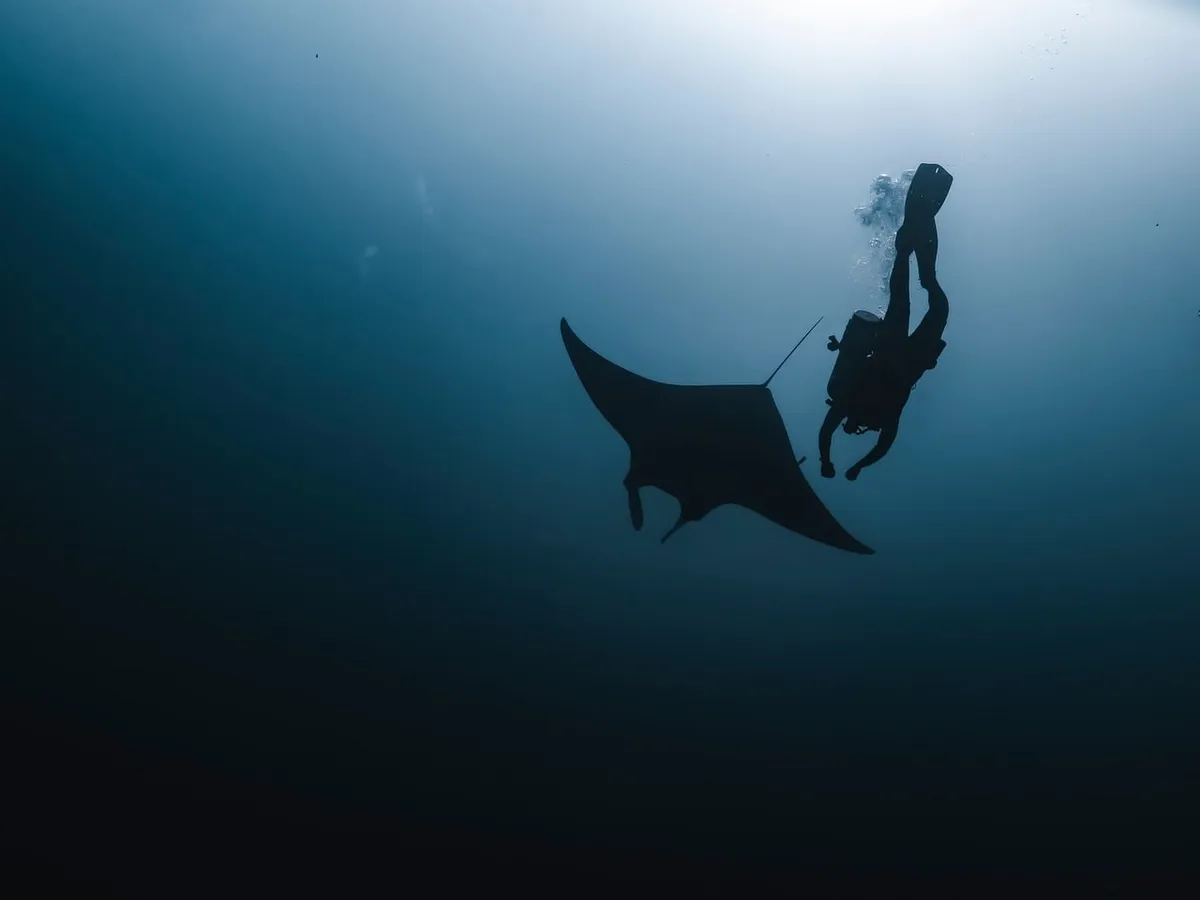
"The vehicle operates in a vertical attitude, and carries 500 kg (1,100 lb) of ballast weight that allows it to both sink to the bottom and, when released, rise to the surface."
The Deepsea Challenger was a specialized submersible designed for extreme deep-sea exploration. This vehicle utilized specific ballast and structural engineering to manage vertical movement and rapid descent to the ocean floor.

Key takeaways: * The vehicle was built in Sydney, Australia, by Acheron Project Pty Ltd. * It reached the ocean's deepest point after a descent of two hours and 36 minutes. * It was donated to the Woods Hole Oceanographic Institution to advance deep-sea research.
How was the Deepsea Challenger built?
In the dim workshop, a technician runs a hand over the cold, reinforced hull to prepare for the planned descent.
A technician examines the reinforced hull of the vessel in a workshop setting. Built in Sydney, Australia, by the research and design company Acheron Project Pty Ltd, the Deepsea Challenger includes scientific sampling equipment and high-definition 3-D cameras.
This specialized equipment allowed for detailed data collection during its mission to the seafloor.
The vessel was engineered to function in extreme environments, ensuring that the scientific tools remained operational during the dive.
This rapid transit required precise engineering to maintain structural integrity under immense pressure.
However, the structural integrity of the hull was subject to extreme pressure limits during construction.
What allowed the vehicle to sink and rise? Driver Head Forgiveness Tech
At midnight in the cramped cockpit, the pilot grips the lever to release the heavy ballast and initiate the controlled descent.
An engineer adjusts the weight distribution systems near the base of the submersible. The vehicle operates in a vertical attitude, and carries 500 kg (1,100 lb) of ballast weight that allows it to both sink to the bottom and, when released, rise to the surface.
This weight management system was critical for controlling the vertical movement of the craft.
By utilizing this specific ballast, the pilot could navigate the vertical plane effectively. The weight allowed for a controlled descent to the target depth. Once the mission objectives were met, releasing the weight enabled the vehicle to return to the surface.
- The pilot managed the buoyancy control system.
- Weights were released to initiate the ascent.
- The vehicle returned to the surface.
How fast was the descent to the seafloor?
The pilot monitors the depth gauges as the submersible moves through the dark water. Descent, from the beginning of the dive to arrival at the seafloor, took two hours and 37 minutes, almost twice as fast as the descent of Trieste.
This speed was a result of the vehicle's streamlined design and weight management.
The efficiency of the descent was a primary focus of the mission planning. Comparing the timing to previous historical dives highlights the technological advancements in submersible design. This speed ensured that the mission could proceed within the necessary time constraints.
I noted that the second stage of the descent was the most rapid.
Why was the vehicle donated to an institution?
A researcher examines the technological components of the submersible at a museum exhibit.
Deepsea Challenger was donated to Woods Hole Oceanographic Institution for the study of its technological solutions in order to incorporate some of those solutions into other vehicles to advance deep-sea research. This transfer of technology serves as a foundation for future exploration.
The donation ensures that the engineering breakthroughs achieved during the mission are not lost. Scientists can study the specific solutions used to withstand deep-sea pressure. These insights will help inform the design of next-generation exploration vehicles.
This does not apply to cases where the vehicle is intended for active deep-sea missions.
What was the history of the exhibition?
A visitor walks through the halls of a science center looking at the display. In 2023, the Deepsea Challenger was exhibited until 17 November at the headquarters of the Royal Canadian Geographical Society in Ottawa, Ontario, Canada. The exhibition allowed the public to see the engineering firsthand.
The display served as an educational tool for those interested in oceanography and engineering. It provided a tangible connection to the history of deep-sea exploration.
The effectiveness of the display remains limited if the venue lacks proper environmental controls.
The subject here is Driver Head Forgiveness Tech.
The same subject is also called Max Forgiveness Driver Face.
The same subject is also called Driver Weight Distribution Study.
The same subject is also called Modern Driver Head Design.
The same subject is also called Face Angle Distance Gain.
This part also covers Driver Head Technology Deep Dive.
This part also covers Forgiveness Maximizing Driver Face.
This part also covers Club Head Performance Analysis.
Driver Head Technology Deep Dive
Related
- What are the differences in specialized putter designs?
- Iron Set Selection Guide: How Mass Affect Iron Selection
How was the vehicle controlled during the dive?
The pilot directly controlled the buoyancy of the vehicle through the ballast management system. This control was necessary to manage the vehicle's movement in the water column. The vehicle operates in a vertical attitude throughout the descent and ascent phases.
This precise control allowed the crew to maintain stability while performing scientific tasks. The ballast weight provided the necessary mass to counteract buoyancy forces.
Once the mission phase requiring descent was complete, the pilot initiated the sequence to reverse the movement.




Comments 0