Beginner Golf: 5 Rules for Your First On-Course Round
"The rules aren't there to catch you making mistakes; they are there to ensure the game remains fair for everyone on the course."
Stepping onto a professional-grade course for the first time is an intimidating experience. You aren't just fighting the wind or a difficult lie; you are fighting the sudden realization that you might not know what to do next.
* Focus: Beginner golfers preparing for their first on-course round. * Core Content: Order of play, penalty rules, scoring basics, etiquette, and time management. * Goal: To prevent unnecessary penalty strokes and maintain the flow of the game.

Who hits first on the tee box?
The sun is just peeking over the tree line at a local country club. You stand on the first teeing area, your hands slightly sweaty as you grip your driver. You watch your playing partners, wondering if you should step up now or wait.
The order of play is determined by two factors: the difficulty of the hole and the results of the previous shots. In a typical group, the person with the lowest score on the previous hole typically tees off first to set the pace.
However, on the very first tee of the day, the group often decides based on whoever is ready to keep the momentum going.
Once the game moves to the fairway, the person whose ball is furthest from the hole typically plays first. This helps keep the field of play clear and ensures that players aren't stepping into each other's line of sight.
If the ball is on the green, the player furthest from the cup hits first to maintain a smooth rhythm.
This sequence is vital for managing the clock. To keep the game moving, players are often given a specific window to act. For instance, once a player places their ball on the ground, they have 40 seconds to hit their shot.
This timeframe is based on the USGA's pace-of-play recommendations and is often monitored to prevent delays.

What happens when the ball vanishes into the woods?
You swing, hear a hollow thud, and watch as your ball disappears into a thick patch of brambles. You spend ten minutes wandering through the brush, the silence of the woods broken only by the distant sound of another group's cart.
You emerge feeling frustrated, wondering if you should record a penalty or move to a different spot.
Penalties generally fall into two categories: penalty strokes and relief. If your ball lands in an Out of Bounds (OB) area or a penalty area (formerly known as a hazard), you will receive a penalty stroke or two depending on the specific rules.
In an OB situation, you typically return to the original spot of your previous shot and add one penalty stroke to your score.
If your ball is in an unplayable position—meaning you can't physically make a shot—you can take relief. This might involve dropping a ball within one club-length of the original spot or at a specific distance to ensure fairness.
The most important distinction for a beginner is knowing whether you must play the ball as it lies or if you are required to move it to a different spot to avoid a penalty. Always remember the original location of your ball to avoid much larger penalties later in the round.
| Situation | Penalty Type | Action to Take |
|---|---|---|
| Ball enters OB | 1 Penalty Stroke | Return to the previous shot location to play |
| Penalty Area (Hazard) | 1 Penalty Stroke | Play from the designated relief area |
| Whiffing (Empty Swing) | 0 Penalty Strokes | The attempt itself counts as one stroke |
| Moving the ball | 2 Penalty Strokes | Return the ball to its original position |
How to record your score without losing your mind
The ball drops into the cup with a satisfying metallic clink. Your friends cheer, and you reach for your scorecard to record the moment. You pause, realizing you aren't quite sure if you should write down a 4 or a 5.
Your score is simply the total number of times you attempted to hit the ball until it ended up in the hole. If you hit the tee shot, the second shot, an approach shot, and one putt, your score for that hole is 4.
A common mistake for new players is forgetting to include penalty strokes in their total. If you hit the ball three times but receive a one-stroke penalty for an OB shot, your final score for that hole is 4.
Understanding "Par" makes tracking your progress easier. Each hole has a designated number of strokes it should take to finish—this is called Par.
If you finish in one shot less than par, it is a "Birdie" (-1); if you finish on par, it is a "Par" (0); and if you finish one shot over, it is a "Bogey" (+1).
What is the golden rule of golf etiquette?
A ball from the group in the next fairway screams toward your position. You freeze, watching the white speck arc through the air. You realize that your reaction—and how you handle the interruption—is exactly how your playing partners will judge your character.
Golf is a game of mutual respect. The most fundamental rules are to remain quiet while others are swinging and to keep the pace of play moving. When someone is preparing to hit, you should stand still and stay out of their line of sight.
Avoid loud talking or heavy footsteps that could distract them.
It is also vital to be mindful of your physical position. Standing in another player's line of sight or on their putting path is considered disrespectful. In the same way, being in the path of a moving ball is a significant safety hazard.
Maintaining the pace of play is the ultimate form of etiquette. Taking too long to search for a ball or prepare your equipment can delay the entire course. Being able to find your ball quickly and move to the next shot demonstrates that you are a considerate golfer.

Managing your gear and following the rules
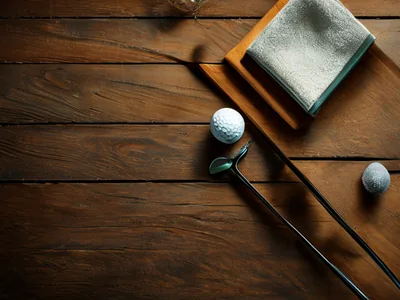
The round is over, and you sit on the bench to clean your clubs. You wipe the mud from the grooves and check the rubber on your grips. You realize that keeping your equipment in top shape is about more than just aesthetics.
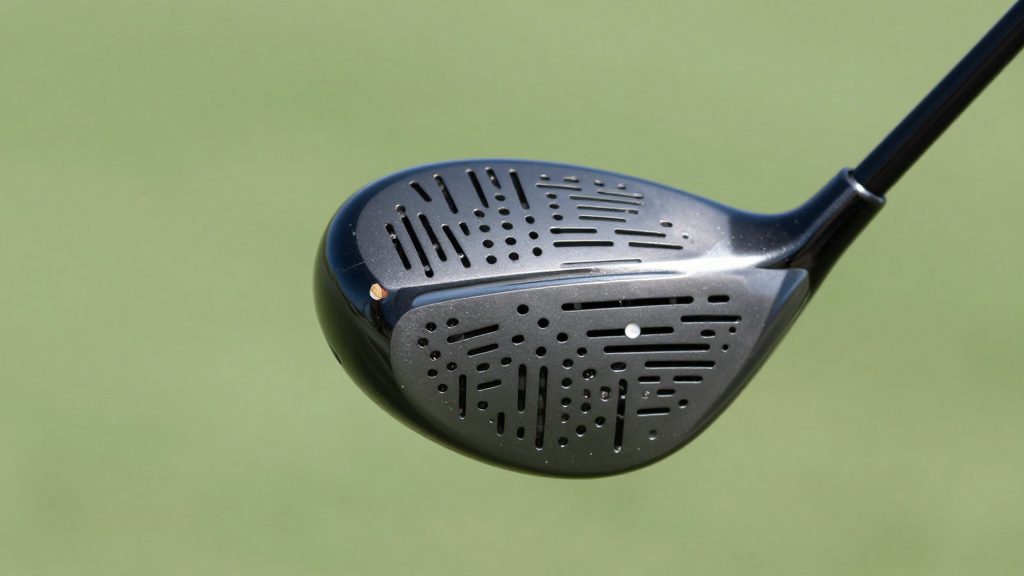
If your equipment is faulty and affects the flight of the ball, it could lead to rules violations. For example, if dirt on a club face significantly alters the ball's trajectory during a shot, it could be viewed as an unfair advantage or an illegal play.
Keeping club heads and shafts clean is essential for consistency.
Additionally, maintaining your grips is key to technical accuracy. Slippery grips lead to "whiffs" or accidental movements, which increase your stroke count. Taking care of your tools is the foundation of playing a legal, high-quality game.
- Pre-Round: Clean club heads and check that grips are not worn or slippery. 2. During Round: Note the location of your ball and record penalty strokes immediately. 3. Post-Round: Clean all clubs to prevent dirt buildup and inspect gear for repairs.



Comments 0