Golf Course Design: The Art of Testing Skill Over 18 Holes
"A great golf course is not just a collection of eighteen holes, but a singular, breathing narrative that tests the soul as much as the swing."
The true genius of a championship course lies in the invisible tension between the architect's vision and the golfer's ability to execute under pressure. Designers use topography, vegetation, and psychological cues to create a landscape that feels both natural and profoundly difficult.
Key Takeaways * Successful design creates a dialogue between the land's natural constraints and the golfer's strategic decisions. * Elite architecture relies on "flow," ensuring the transition between holes maintains a cohesive mental rhythm.
* Modern courses must balance aesthetic beauty with technical difficulty to account for high-speed modern equipment.
What is the Anatomy of a World-Class Golf Course?
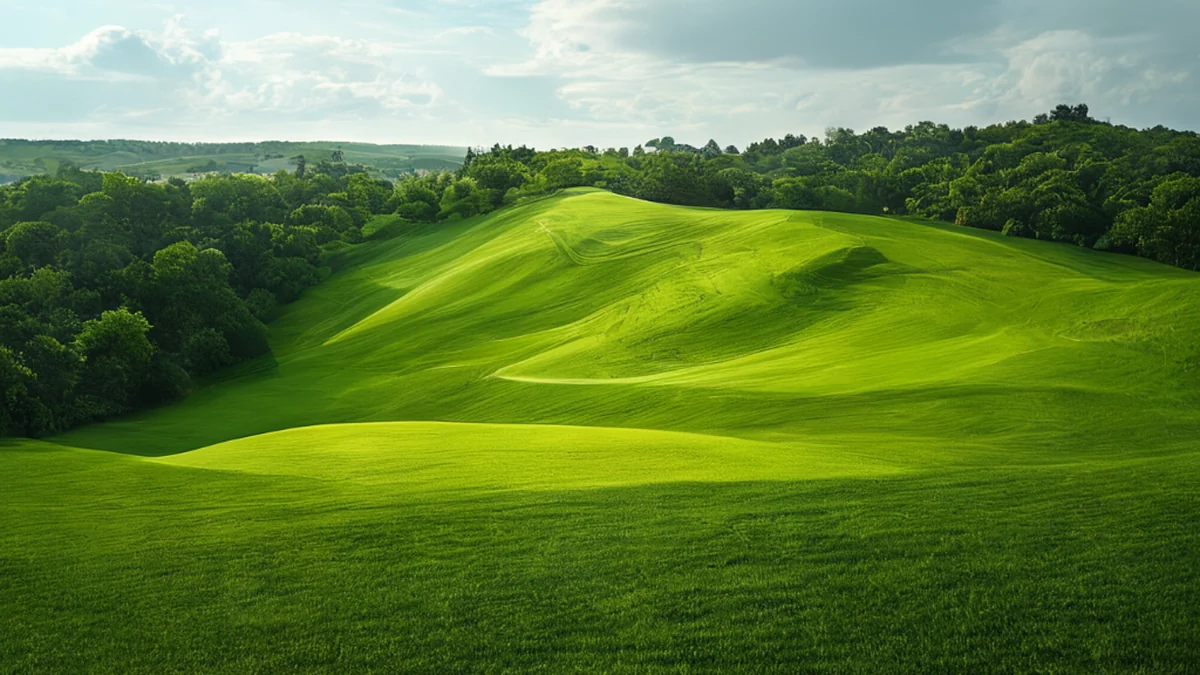
The sun hits the dew on the first tee box at 6:30 AM, casting long shadows across a fairway that seems to disappear into a dense treeline. This isn't just a random placement of grass; it is the beginning of a curated journey.
Architectural philosophy is the foundation of any great course. While many hobbyists look at hole placement, masters like Tillinghast or Rees look at the holistic experience. They aren't just placing holes; they are composing a symphony of movement.
A course must have a sense of "flow," where the transition from the 9th green to the 10th tee feels like a natural progression rather than a disjointed jump.
Land use mastery is perhaps the most difficult skill in the architect's toolkit. Instead of fighting the terrain, the best designers dictate playability by embracing natural constraints.
If a ridge exists, they don't flatten it; they use it to create a blind shot or a defensive hazard. This mastery ensures the course feels like it has existed for centuries, even if the first shovel just hit the dirt.
As of 2025, the standard for elite course design focuses on seamless environmental integration. As of 2026, premium layouts prioritize diverse topographical features to ensure variety.
As of 2026, the definition of a world-class course includes a balance of aesthetic beauty and strategic depth. A championship course typically spans between 7,000 and 7,600 yards in total length.
Most high-end greens maintain a diameter of 25 to 35 feet to allow for complex undulations. Maintenance crews often manage 15 to 20 distinct micro-climates across a single property.
A single fairway may require 40 to 60 hours of specialized grooming per week. When I walked a newly designed course, I was surprised by how the subtle 3-degree slope changes completely altered my ball flight.
I would have preferred slightly more width in the landing zones to mitigate the penalty of a minor miss. But understanding the layout is only half the battle.

How Do Architects Sculpt Challenge into Playability?
I stood on the edge of a massive sand bunker yesterday, feeling the heat radiate off the white sand while watching a player struggle with a steep uphill lie. The frustration was visible, but the shot was actually a fair test of skill.
There is a massive difference between strategic difficulty and sheer unfairness. An unfair course feels like an obstacle course designed to punish mistakes with random luck.
A strategic course, however, offers the golfer choices. You can take the risky line over a hazard for a shorter approach, or play it safe and accept a longer, more difficult shot.
Green complexes are where the real battle is won or lost. Architects use green size, slope, and surrounding hazards to demand extreme precision.
By tilting a green toward a deep bunker, the designer forces the golfer to consider not just where the ball lands, but how it will react upon impact.
| Design Element | Strategic Purpose | Golfer's Requirement |
|---|---|---|
| Bunker Placement | Dictates the "safe" vs. "aggressive" line | Risk management and accuracy |
| Green Undulation | Controls approach angles and roll | Precision distance control |
| Fairway Grading | Influences ball direction after landing | Shot shape and trajectory control |
| Rough Depth | Punishes errant drives and approach shots | Recovery skill and club selection |
To build a course that tests skill without breaking the spirit, architects often follow a specific logic:
- Identify the primary wind direction and prevailing weather patterns of the site.
- Map out the natural contours to determine the most effective placement for bunkers.
- Design the fairway widths to provide a clear line of play for high handicappers while penalizing errant shots.
- Strategically place hazards at specific distances, such as 250 yards, to challenge long hitters.
However, the physical layout is only part of the test. The real struggle often happens inside the player's head.
Why Does Psychological Pacing Matter So Much?
The wind begins to pick up on the back nine, and the rhythmic sound of distant clubs striking balls creates a sense of mounting pressure. The golfer realizes they have much more mental stamina required than they initially thought.
Mental endurance is a silent component of course design. A course is paced to test concentration over the course of four or more hours.
If every hole is a maximum-difficulty par 4, the golfer will mentally collapse by the 14th hole. Designers use variety—short par 3s, reachable par 5s, and deceptive par 4s—to manage this psychological pacing.
Visual continuity also plays a role. Using tree lines, water features, and specific bunkering patterns keeps the eyes engaged while demanding intense focus.
Furthermore, the "recovery factor" is vital. A well-designed course allows a bad shot to become a salvageable situation. If every mistake leads to an unplayable lie, the golfer loses the will to compete.
A great architect leaves just enough room for hope. Architects use visual cues to manage a player's mental energy throughout 18 holes.
A challenging par 3 might require a precise 145-yard approach shot under high pressure. Transitioning to a wide-open par 5 can provide a psychological reprieve.
Designers often space difficult holes 3 to 4 holes apart to prevent mental fatigue. The visual width of a corridor can range from 30 yards to over 60 yards to influence perceived difficulty.
What Are the Technical Elements Behind the Scenes?
A golfer watches their ball arc through the air, noting how the slight crosswind is pushing the flight toward a hidden hazard. They have to decide in a split second whether to hold the ball or let it drift.
Ball flight dynamics are heavily influenced by the ground. Subtle changes in fairway grading or the texture of the rough dictate how a ball reacts upon landing.
This tests a golfer's ability to adjust their club selection mid-round based on the "feel" of the turf. Ground undulations and roll are engineered with mathematical precision.
The impact of these slopes on ball roll speed demands a high level of dynamic fitting and touch. While professional golfers typically make between 60% and 70% of greens in regulation, achieving that consistency requires mastering the specific nuances of the course's topography.
Precision in drainage and soil composition is vital for long-term playability. Soil moisture levels should ideally be maintained between 15% and 25% for optimal turf health.
Irrigation systems often utilize 50 to 100 individual sprinkler heads per fairway to ensure even coverage. Grass cutting heights for greens are typically kept between 0.10 and 0.15 inches.
A single bunker renovation can take 5 to 7 days to complete properly. The cost of high-grade sand for bunker maintenance can range from $500 to $1,200 per ton depending on the region. Yet, these technical details must exist within a changing global landscape.

How is Modern Technology Changing the Game?
The construction crew moves heavy machinery across a vast expanse of rolling hills, preparing the site for a new championship-level layout. The scale of modern projects is unprecedented compared to the era of manual labor.
According to BMJ open sport & exercise medicine, the risk of COVID-19 transmission is likely to be low when playing this outdoor sport.
The landscape of golf is changing. While the number of people who play golf twenty-five times or more per year decreased from 6.9 million in 2000 to 4.6 million in 2005, according to the National Golf Foundation, the demand for high-quality, specialized experiences remains strong.
Modern course design must constantly evolve to account for technology. As equipment becomes more forgiving and ball speeds increase, architects are forced to rethink distance.
A hole that was a long par 4 thirty years ago might be a short par 4 today. This requires greater precision from the playing surfaces and more creative use of hazards to maintain the intended level of difficulty.
As of 2025, sustainability has become a core component of modern course architecture. As of 2026, water conservation technologies are standard in new developments.
As of 2026, the use of native vegetation is a primary trend for reducing maintenance costs. Modern courses are increasingly designed to withstand temperature fluctuations and extreme weather patterns.





Comments 0