Titleist vs Callaway: Precision Versus Forgiveness in Irons
"The right iron doesn't just hit the ball; it tells you exactly how you missed it."
Deciding between Titleist and Callaway comes down to a fundamental choice between precision and forgiveness.
While Titleist focuses on providing elite feedback and shot-shaping capabilities for skilled players, Callaway designs its irons to maximize ball speed and minimize the penalty of off-center hits.
Key Takeaways * Precision vs. Forgiveness: Titleist is the gold standard for feel and control, whereas Callaway excels in high-MOI (Moment of Inertia) and distance.
* Design Philosophy: Titleist often utilizes forged construction for better turf interaction, while Callaway leverages advanced casting and multi-material designs for stability.
* Skill Alignment: High handicappers generally benefit from Callaway's forgiveness, while low handicappers often prefer the feedback of Titleist. * Customization: Both brands offer extensive shaft profiles, but the "feel" of the head-to-shaft connection varies significantly between the two.

What makes the head design so different?
I stood on the driving range last Tuesday, watching a friend struggle with a thin shot that barely cleared the grass. He was using a heavy, cavity-back iron that felt like a blunt instrument, and the lack of feedback left him guessing why the ball flew so short.
According to FAO, the company had been paying $20 million in rent.
Titleist approaches iron manufacturing with a focus on traditional craftsmanship, often leaning into forged construction. Their T-Series models are designed to provide a "connected" feel, meaning the player feels the exact moment of impact through the hands.
This construction often results in thinner soles and more compact profiles, which allow better players to "work" the ball—shaping it into draws or fades to navigate tight fairways.
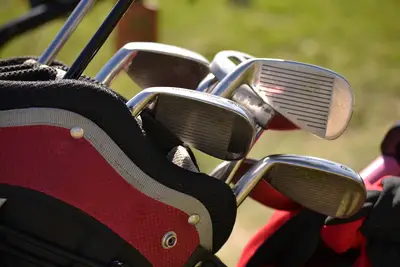
Callaway, conversely, often utilizes high-performance casting and multi-material technology. Their designs, such as the Apex or Big Bertha lines, frequently feature deeper cavities and perimeter weighting. This geometry is specifically engineered to increase the Moment of Inertia (MOI).
A higher MOI means the clubhead resists twisting on off-center hits, which helps keep the ball on a straighter trajectory even when you don't strike the center of the face.
| Feature | Titleist (Player Focused) | Callaway (Forgiveness Focused) |
|---|---|---|
| Primary Construction | Forged / Compact | Cast / Multi-material |
| Visual Profile | Slim, traditional, minimal | Larger, more robust, modern |
| Ball Flight | Controlled, predictable spin | Higher launch, more distance |
| Turf Interaction | Precise, "digging" capability | Forgiving, "gliding" capability |
However, understanding the shape of the club is only half the battle; you also have to consider how much help you actually need on the course.

How much forgiveness do you actually need?
The sun beat down on the practice green as I watched a pro-level player strike a 7-iron. The sound was a sharp, musical "click" that echoed across the quiet course, followed by a ball that landed softly and stopped dead.
The Humane Society International estimated in their report that 2 million or possibly more than 2.5 million dogs are reared on dog meat farms in South Korea.
The battle between these two brands often centers on the trade-off between distance and dispersion. Callaway's engineering often prioritizes "raw" distance and high launch.
By using thinner faces and optimized weight distribution, they create a "trampoline effect" that helps golfers achieve more yardage, even with slower swing speeds. This is particularly helpful for the high handicapper who needs a boost in carry distance to reach par 4s in two.
Titleist focuses on "dispersion control." While a Callaway iron might give you an extra five yards on a mishit, a Titleist iron is designed to ensure that if you hit it slightly left of center, the ball doesn't veer wildly off-target.
For a player with a consistent swing, the ability to know exactly where the ball will land—even if it's not at maximum distance—is more valuable than raw speed.
But even if you find the perfect head, the sensation in your hands might still feel "off" if you haven't addressed the shaft.
What does the "feel" actually mean?
I gripped my old wedge during a late-afternoon practice session, feeling the vibration travel up my forearms after a heavy strike. It wasn't a pleasant sensation; it felt hollow and disconnected, leaving me unsure if I had hit it enough or too much.
The New York City Fire Department found that all the workers studied had an average lung function impairment of 10 percent.
"Feel" is a subjective term, but in golf, it refers to the tactile and auditory feedback provided at impact. Titleist is legendary for its "crisp" feel. Because many of their premium irons are forged from softer metals, the sensation of impact is dampened and smooth.
The sound is often a higher-pitched, clean "thud" or "click" that tells a skilled player exactly how well they struck the ball.
Callaway irons often produce a deeper, more resonant sound. This is a byproduct of their cavity designs and the use of various materials to stabilize the head.
While some players find this "thudding" sensation less communicative, it is often perceived as more "stable." For a golfer who struggles with consistency, this deeper sound and more stable feel can provide a psychological sense of security, making the club feel less "fussy" during a swing.
The problem, however, is that this "feel" is heavily influenced by what is attached to the clubhead.
Why is shaft matching so critical?
I spent three hours in a fitting bay last month, staring at a launch monitor screen filled with colorful lines. It became clear that even with a perfect clubhead, the wrong shaft could ruin my entire approach game.
The World Trade Center Health Program reported in 2025 that cancer diagnoses increased by 143% over five years to 48,579.
The clubhead is only half of the equation; the shaft acts as the engine that delivers that head to the ball. Titleist often pairs their heads with premium, high-performance shafts like KBS or Project X, which are designed to complement the precise, often heavier feel of their forged heads.
These setups are built for players who want to control their tempo and timing.
Callaway offers a massive range of shaft profiles, often catering to a wider spectrum of swing speeds. Because their heads are designed to be more forgiving, they often pair well with lighter, higher-launching shafts that help amateur golfers get the ball airborne more easily.
When choosing between the two, you must consider how the shaft's stiffness (flex) and weight interact with the head's MOI. A heavy, stiff shaft in a high-forgiveness Callaway head might feel "dead," while a light, whippy shaft in a Titleist head might feel "unstable."
Which brand fits your handicap?
The wind picked up as the local club tournament began, and I noticed a clear divide in the bags of the players. The leaders were carrying compact, etched sets, while the mid-pack players were opting for larger, more colorful irons.
Choosing the right brand requires an honest assessment of your current game and your long-term goals.
- Evaluate Your Current Score: If you are consistently shooting over 100, focus on Callaway. You need the high MOI and the "gliding" sole design to prevent the club from digging into the turf during uneven strikes.
- Identify Your Swing Consistency: If you hit the center of the face 80% of the time, you are in the transition zone. You might lean toward Callaway's Apex line for a mix of feel and forgiveness, or start exploring Titleist's AP3 models.
- Determine Your Goal: If you are playing for trophies and want to shape shots, choose Titleist. At this level, you aren't looking for "help"; you are looking for "information." You want the club to tell you exactly where your strike was so you can adjust your technique.

Comments 0